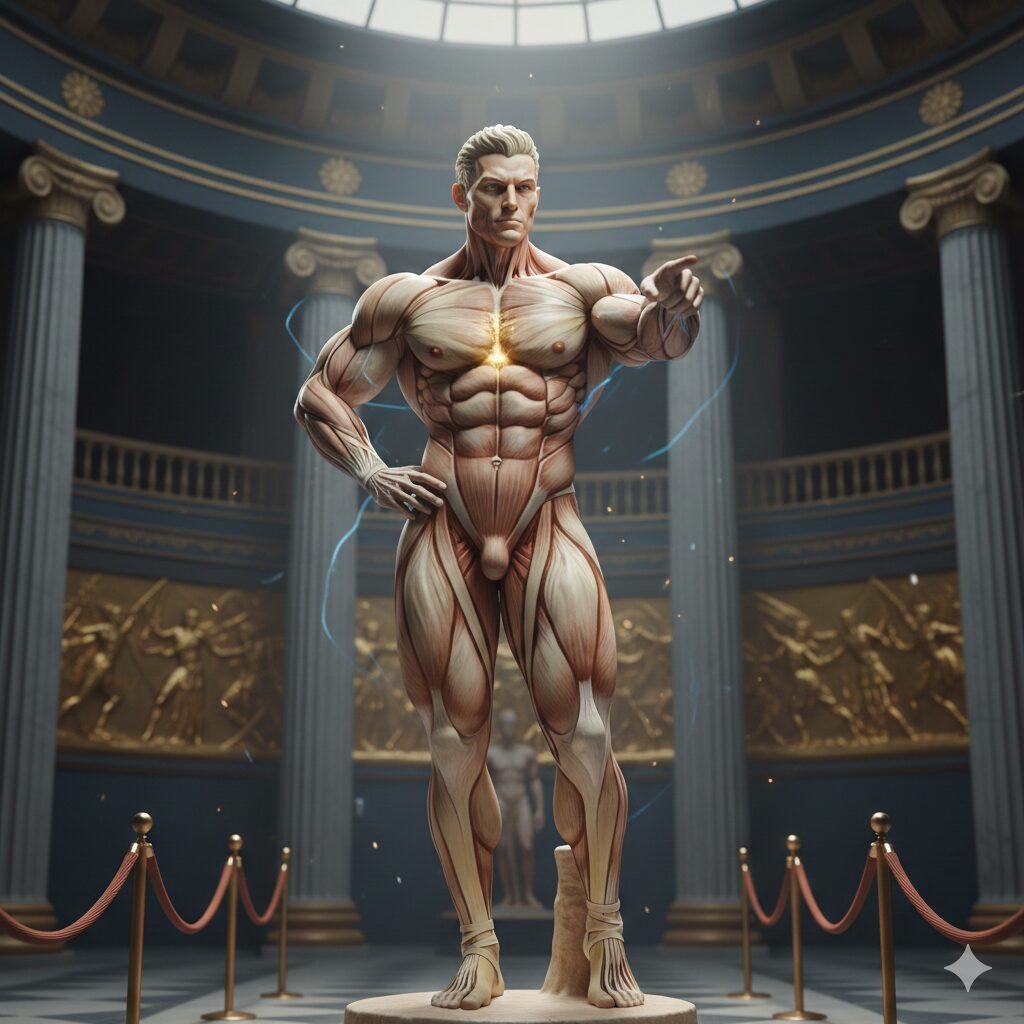
Learn the training secrets, nutrition hacks, and the Golden Ratio formulas needed to sculpt a genuine Greek God physique.
or centuries, we’ve stared at the marble statues of Polykleitos and Phidias, wondering how ancient sculptors captured such a perfect blend of power, grace, and aesthetics. Today, the “Greek God Physique” isn’t just an art history term; it’s the gold standard of modern bodybuilding.
It’s not about being the biggest guy in the room—it’s about being the most proportionate. It’s the visual representation of strength, health, and discipline. If you’re tired of the “bulky and bloated” look and want to carve out a frame that looks like it was chiseled from Aegean marble, you’re in the right place.
What Defines the Greek God Physique?
Before you pick up a dumbbell, you need to understand the “Golden Ratio.” In mathematics, this is roughly $1 : 1.618$. In bodybuilding, this translates to the V-Taper: wide shoulders, a thick upper chest, and a tight, narrow waist.
The Key Pillars of the Look:
-
The V-Taper: Massive lateral deltoids and lats that make the waist look smaller by comparison.
-
Square Pecs: An emphasis on the upper chest (clavicular head) to avoid a “droopy” look.
-
Neck and Traps: Just enough development to look powerful, but not so much that you lose your neck.
-
Functional Leanliness: Maintaining a body fat percentage between 8% and 12%. This ensures muscle definition (like the “Adonis Belt”) is visible without looking emaciated.
Training: The “High-Frequency, High-Intensity” Approach
To look like an Olympian, you have to train like one. The goal isn’t just hypertrophy (muscle growth); it’s myofibrillar hypertrophy, which builds dense, hard muscle rather than just “pumped up” fluid-filled muscle.
1. Prioritize the Incline Press
Most lifters over-focus on the flat bench press. This builds the lower chest, often leading to a “heavy” look. To get the Greek God look, 80% of your chest work should be on an incline.
Pro Tip: Aim for a 30 to 45-degree angle. This targets the upper fibers and creates that “plate armor” appearance.
2. The Shoulder Boulder Strategy
Wide shoulders are the quickest way to change your silhouette. You need to hammer the medial deltoid.
-
Heavy Overhead Press: For overall mass.
-
Lateral Raises: For that specific “cap” on the shoulder. Try “leaning” lateral raises to increase the range of tension.
3. Don’t Forget the Posterior Chain
A Greek God isn’t a “mirror muscle” pony. You need a thick back. Focus on Weighted Pull-ups and Deadlifts. A strong back supports your posture, making you stand taller and more confident—essentially “opening up” your physique.
Nutrition: Fueling the Statue
You can’t sculpt a masterpiece out of low-quality clay. Your diet needs to be as disciplined as your training.
The Macro Breakdown
While everyone is different, a solid starting point for this aesthetic is:
-
Protein: 1g per pound of body weight (to repair and build).
-
Fats: 20-25% of total calories (to keep hormones/testosterone high).
-
Carbs: The remainder (to fuel those grueling workouts).
Intermittent Fasting (IF)
Many proponents of the Greek God look swear by a 16:8 fasting protocol. By pushing your first meal back several hours after waking, you make it easier to stay in a caloric deficit or at maintenance while still eating large, satisfying meals. It also keeps your insulin sensitivity high, helping you stay lean while adding muscle.
The “Golden Ratio” Workout Routine
Here is a sample 3-day split designed to maximize recovery and hit the “aesthetic” muscles hard.
| Day | Focus | Key Exercises |
| Monday | Chest & Back | Incline DB Press, Weighted Pull-ups, Low Cable Rows |
| Wednesday | Shoulders & Arms | Overhead Press, Lateral Raises, Incline Curls, Skullcrushers |
| Friday | Legs & Abs | Barbell Squats, Romanian Deadlifts, Hanging Leg Raises |
Recovery: The Forgotten Sculptor
Growth doesn’t happen in the gym; it happens while you sleep. To maintain the hormonal profile necessary for a lean, muscular physique, you need 7 to 9 hours of quality sleep. Furthermore, manage your cortisol. High stress leads to fat storage around the midsection—the literal enemy of the V-taper. Take walks, meditate, or simply ensure you aren’t overtraining.
Conclusion: The Journey from Mortal to Mythic
Achieving a Greek God physique isn’t an overnight transformation. It is a slow, deliberate process of adding weight to the bar and subtracted fat from the frame. It requires the patience of a sculptor and the intensity of a warrior.
Remember, the goal isn’t perfection—it’s proportion. Focus on your weak points, stay lean, and build the strength to back up the look. You aren’t just building a body; you’re building a legacy of self-discipline.
Read More
The Ultimate Guide to Exercise Mat Workouts: Best Transform Your Home Into a Powerhouse Gym (2026)
FAQ: Frequently Asked Questions
1. How long does it take to get a Greek God physique?
If you are starting from a relatively lean base, significant changes can be seen in 6 to 12 months. If you need to lose significant body fat first, it may take 18 to 24 months of consistent effort.
2. Do I need to take supplements?
Supplements are only the “cherry on top.” Creatine monohydrate, a high-quality whey protein, and perhaps a pre-workout are helpful, but they won’t replace a solid diet and hard training.
3. Can I get this look without lifting heavy?
While “toning” exists, the density and shape of the Greek God look come from progressive overload. You need to get stronger over time in the key compound lifts to create that hard, etched appearance.
4. Is it possible for “hardgainers”?
Absolutely. Hardgainers actually have an advantage in staying lean. The focus for a hardgainer should be on a slight caloric surplus and heavy, low-volume lifting to trigger growth without burning too many calories.