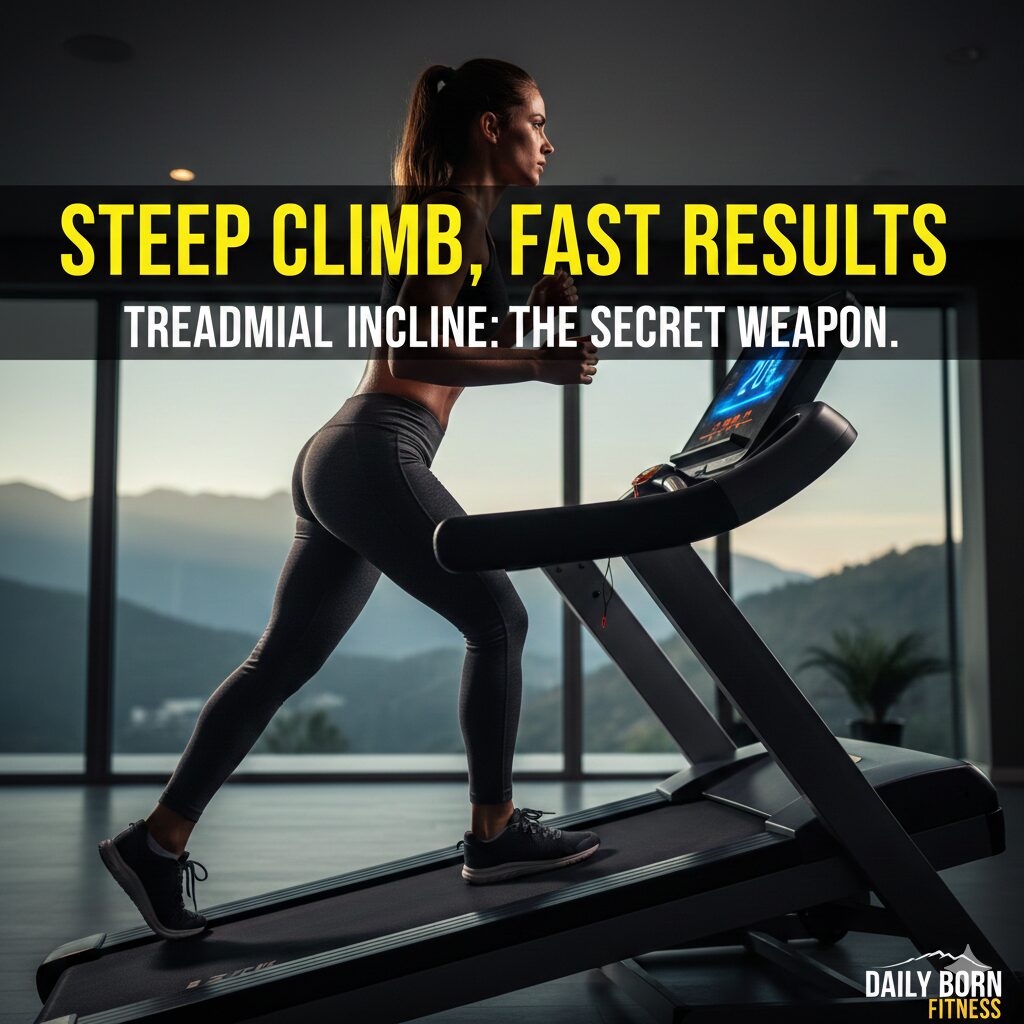
If you’ve ever walked into a gym and seen someone trekking uphill on a treadmill that looks like it’s trying to reach the ceiling, you might have wondered: Is that actually doing anything, or are they just gluttons for punishment?
The truth is, if you aren’t using the incline feature on your treadmill, you’re essentially leaving half of your results on the gym floor. Whether you’re looking to torch calories, prep for a hiking trip, or finally see some definition in your glutes, the incline is your secret weapon.
In this deep dive, we’re exploring why a treadmill with incline is a non-negotiable for your home gym, how to use it without blowing out your knees, and the best ways to keep your workouts from getting stale.
The Science of the Slant: Why Treadmill with Incline Matters
When you run or walk on a flat surface, your body moves efficiently—almost too efficiently. Your momentum does a lot of the work for you. The moment you introduce a grade (even just a 1% or 2% incline), the physics of your workout changes entirely.
1. Accelerated Calorie Burn
The math is simple: moving a mass (you) against gravity requires more energy. Research suggests that walking at a brisk pace on a 10% incline can burn almost double the calories of walking at the same speed on a flat surface. For those of us short on time, this is the ultimate “workout hack.”
2. Superior Posterior Chain Activation
Standard running hits your quads hard, but incline training shifts the focus to your posterior chain—your glutes, hamstrings, and calves. If “toning” is your goal, the incline is effectively a weightlifting session and a cardio session rolled into one.
3. Reduced Impact on Joints
This sounds counterintuitive, but hear me out. Walking at a high incline allows you to get your heart rate into the “vigorous” zone without the high-impact pounding of running. For individuals with knee issues or those recovering from shin splints, a steep power-walk is often much safer than a flat-ground sprint.
Understanding Treadmill with Incline Levels: How High Should You Go?
Not all treadmills are created equal. Depending on your goals, you’ll want to look at different specs:
-
Standard Incline (0–12%): Found on most residential treadmills. Perfect for simulating outdoor hilly terrain.
-
High Incline (15–20%): Great for serious hikers and those looking for intense weight loss.
-
Incline Trainers (Up to 40%): Specialized machines (like the NordicTrack X22i) designed for extreme “vertical” training. These allow you to burn “running-level” calories while walking at 2 mph.
-
Decline Training (-3% to -6%): Often overlooked, but crucial for runners. Decline training strengthens the “braking” muscles (eccentric loading) and prepares your legs for downhill sections of real-world races.
Top 3 Workouts to Try on Your Treadmill with Incline
If you’re bored of “just walking,” try these structured routines to spice things up:
The “Mountain Climber” (High Intensity)
-
Warm-up: 5 mins at 0% incline (brisk walk).
-
The Climb: Increase incline by 2% every 2 minutes until you reach 12%. Maintain a steady walking pace.
-
The Peak: Stay at 12% for 5 minutes.
-
The Descent: Decrease by 2% every minute until you’re back to flat.
-
Cool-down: 3 mins of slow walking.
The 12-3-30 (The Viral Classic)
Made famous on social media, this workout is deceptively simple but incredibly effective:
-
Incline: 12%
-
Speed: 3.0 mph
-
Duration: 30 minutes
-
Tip: Do not hold onto the handrails! Holding on reduces the workload and ruins your posture.
HIIT Hill Sprints
-
Interval: 30 seconds of running at an 8% incline at 80% of your max speed.
-
Recovery: 60 seconds of walking at 0% incline.
-
Repeat: 10–15 times.
What to Look for When Buying a Treadmill with Incline
If you’re shopping for a new machine, don’t just look at the price tag. Check these three pillars:
-
Motor Horsepower (CHP): Moving the belt while it’s at an angle puts extra strain on the motor. Look for at least 3.0 CHP (Continuous Horsepower) if you plan on doing frequent incline work.
-
Stability: When the machine rises, any wobbles become magnified. Test the “shake” factor. A heavy frame usually means a safer, quieter climb.
-
Automatic vs. Manual: Avoid manual incline treadmills unless you’re on a very tight budget. Having to stop your workout to flip a lever is a momentum killer. Go for digital, “on-the-fly” adjustments.
Common Mistakes to Avoid
-
The “Death Grip”: Gripping the front or side rails for dear life. This leans your body back, effectively neutralizing the incline you just set. If you can’t walk without holding on, lower the incline or the speed.
-
Ignoring Your Calves: Incline walking is a calf-killer. Ensure you are stretching your lower legs thoroughly after every session to avoid Achilles tendonitis.
-
Too Much, Too Soon: Jumping straight to a 15% grade for an hour is a recipe for lower back pain. Start at 3-5% and build your “climbing legs” over several weeks.
Conclusion
A treadmill with incline is more than just a piece of cardio equipment; it’s a versatile tool for functional strength, weight loss, and athletic preparation. By mimicking the natural variations of the great outdoors, you engage more muscles, burn more fat, and keep your mind engaged.
Whether you’re aiming for the summit of a literal mountain or just trying to hit your goal weight, remember: The incline is your friend. It makes the work harder, but it makes the results come faster. So, next time you step onto the belt, reach for that “up” arrow and take your fitness to new heights.
Read More content
The Ultimate Guide to Rome CBD: Wellness, Fitness, and Legal Tips (2026)
Frequently Asked Questions (FAQ)
Q: Is walking on an incline better than running on a flat surface? A: “Better” depends on your goals. Walking on a high incline burns a similar amount of calories as flat running but with significantly less impact on your joints. It’s better for muscle toning (glutes/calves), while running is often better for pure cardiovascular speed.
Q: Does incline walking help lose belly fat? A: You cannot “spot reduce” fat, but incline walking is an incredibly efficient way to increase your total daily calorie burn. By creating a larger caloric deficit, you will lose fat across your entire body, including the midsection.
Q: Can I use the incline every day? A: It’s best to rotate intensities. High-incline walking can be taxing on your calves and lower back. Try alternating high-incline days with flat “recovery” days or strength training.
Q: What is a “good” incline for a beginner? A: Start with a 2% to 3% grade. This more closely mimics the wind resistance and natural terrain of walking outside. From there, increase by 1% each week as your stamina improves.
Q: Why does my lower back hurt when I use the incline? A: This usually happens if you are leaning too far forward or holding onto the rails. Try to keep your core engaged and your shoulders stacked over your hips. If the pain persists, reduce the incline.