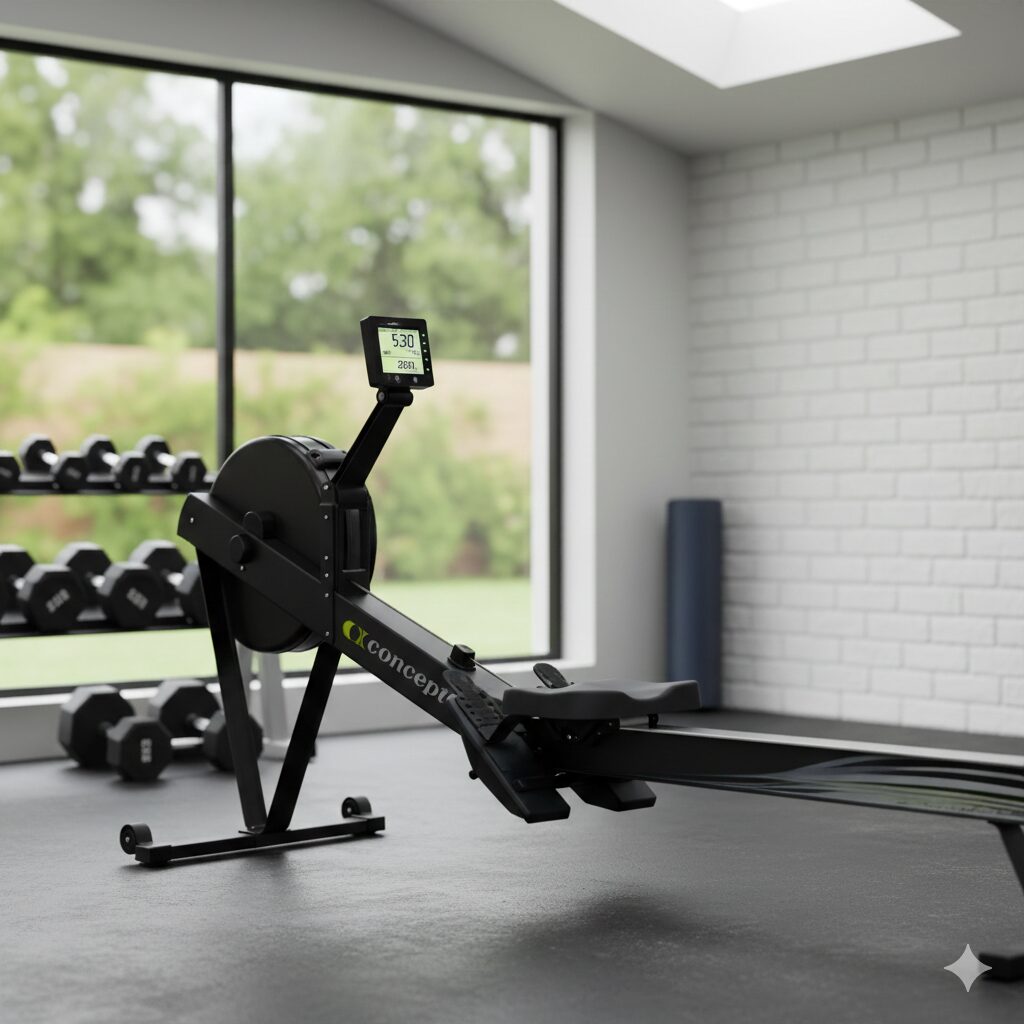
In the world of fitness equipment, trends come and go. One year it’s high-tech mirrors; the next, it’s AI-powered vibration plates. But for over four decades, one machine has remained the undisputed king of the gym floor: the Concept 2 Rower.
Whether you’re training for an Olympic gold medal, looking to torch calories, or simply want a machine that will literally outlive you, the Concept2 is the gold standard. In this comprehensive guide, we’ll dive into why this “simple” machine is the most powerful tool in your fitness arsenal, how to master it, and why it’s the best pound-for-pound value on the market.
What Makes the Concept 2 Rower Different?
If you’ve stepped into a CrossFit box, a professional rowing club, or a high-end commercial gym, you’ve seen it. The iconic flywheel, the stainless steel track, and the signature “woosh” of air resistance. But what makes it better than the flashy, screen-heavy competitors?
1. Air Resistance: You Are the Motor
Unlike magnetic rowers that have a fixed “top speed,” the Concept2 uses air resistance. The harder you pull, the more wind the flywheel generates, and the more resistance you feel. This means the machine scales perfectly to your fitness level.
2. The PM5 Monitor: Data You Can Trust
The Performance Monitor 5 (PM5) is the brain of the machine. It is world-renowned for its accuracy. 500 meters on one Concept2 is exactly the same as 500 meters on any other Concept2 in the world. This is why indoor rowing records and virtual races are held exclusively on this machine.
3. Bulletproof Durability
The Concept2 is built like a tank. It is designed to withstand 24/7 use in commercial gyms. With minimal maintenance (just a little chain oil now and then), these machines can easily last 20+ years.
The Physical Benefits: Why Rowing is the Ultimate Full-Body Workout
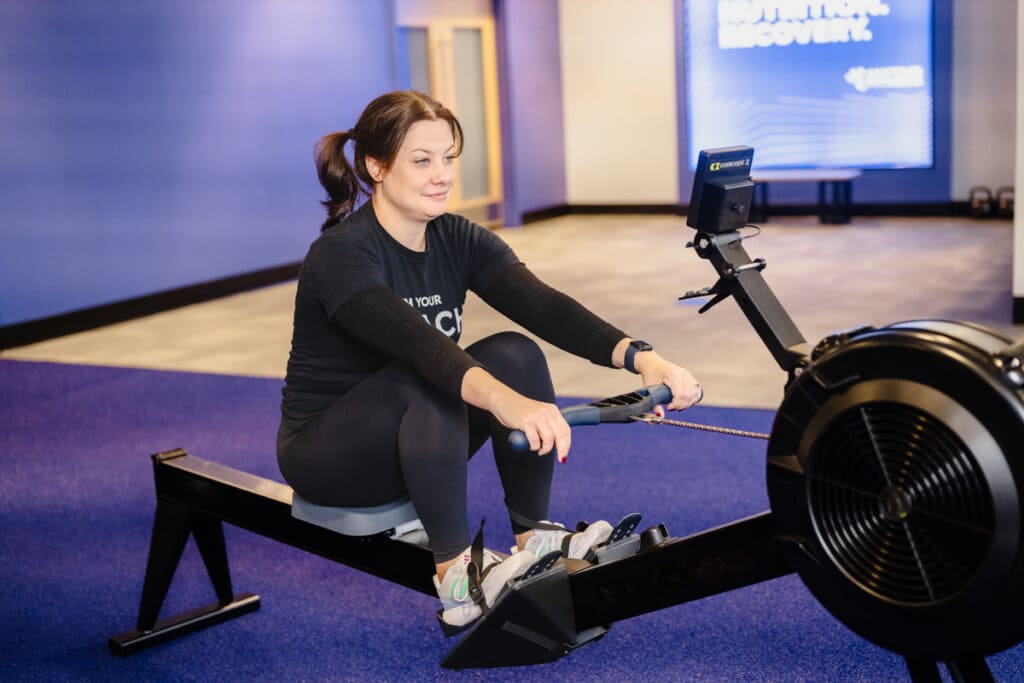
Many people mistake rowing for an “arm workout.” In reality, rowing is a legs-first movement. A proper stroke on a Concept2 uses 86% of your muscles, making it one of the most efficient ways to train.
Full-Body Muscle Engagement
-
The Legs (60%): Your quads, hamstrings, and glutes provide the explosive power.
-
The Core (20%): Your abs and lower back transfer that power from your legs to the handle.
-
The Upper Body (20%): Your lats, traps, and arms finish the stroke.
Low Impact, High Intensity
Unlike running, which can be brutal on the knees and ankles, rowing is zero-impact. It allows you to reach peak cardiovascular intensity without the joint wear and tear, making it ideal for athletes of all ages—from teenagers to those in their 80s.
Mastering the Technique: The Four Phases
To get the most out of your Concept2 (and avoid back pain), you must master the rhythm. Think of it as: Power, then Patience.
-
The Catch: This is the starting position. Shins are vertical, back is straight, and arms are extended.
-
The Drive: This is the work phase. Push with your legs first, then lean back slightly, and finally pull the handle to your ribs.
-
The Finish: Legs are straight, elbows are behind the body, and the core is engaged.
-
The Recovery: This is where you breathe. Extend your arms, lean forward, and then slide your legs back to the catch. The recovery should take twice as long as the drive.
Concept 2 Rower Model D vs. Model E vs. RowErg: What’s the Difference?
In recent years, Concept2 simplified their lineup. They now call their primary machine the Concept2 rower
.
-
Standard Leg Height: The classic version with a 14-inch seat height.
-
Tall Leg Height: Features a 20-inch seat height, making it easier for individuals with limited mobility or knee issues to get on and off the machine.
Both versions use the same flywheel and PM5 monitor, so the workout experience remains identical.
Frequently Asked Questions (FAQ) for Concept 2 rower
1. Is the Concept 2 rower loud?
It produces a rhythmic “whooshing” sound from the air flywheel. While louder than silent magnetic rowers, most users find the sound motivating and white-noise-like. You can easily watch TV while rowing if you use headphones.
2. Does it fold for storage?
The Concept2 doesn’t “fold,” but it does something better: it breaks into two pieces in seconds without tools. You can then stand the pieces up vertically, allowing it to fit into a closet or a corner.
3. What is a good 2,000-meter (2k) time?
For beginners, finishing under 9 minutes is a great start. Intermediate rowers usually aim for sub-8 minutes, while elite athletes strive for the “sub-7” or even “sub-6” mark.
4. What damper setting should I use?
A common mistake is putting the damper on 10. For most people, a setting between 3 and 5 provides the most realistic “on-water” feel and prevents premature muscle fatigue.
Conclusion
The Concept2 Rower is a rare piece of equipment that justifies the hype. It is an honest machine; it gives back exactly what you put into it. Whether you want to lose weight, build explosive power, or improve your cardiovascular health, there is no better investment for your home gym. It isn’t just a rower; it’s a lifelong partner in your fitness journey.
Read More Content
Best Creatine for Women in 2026: Build Muscle & Boost Brain Power