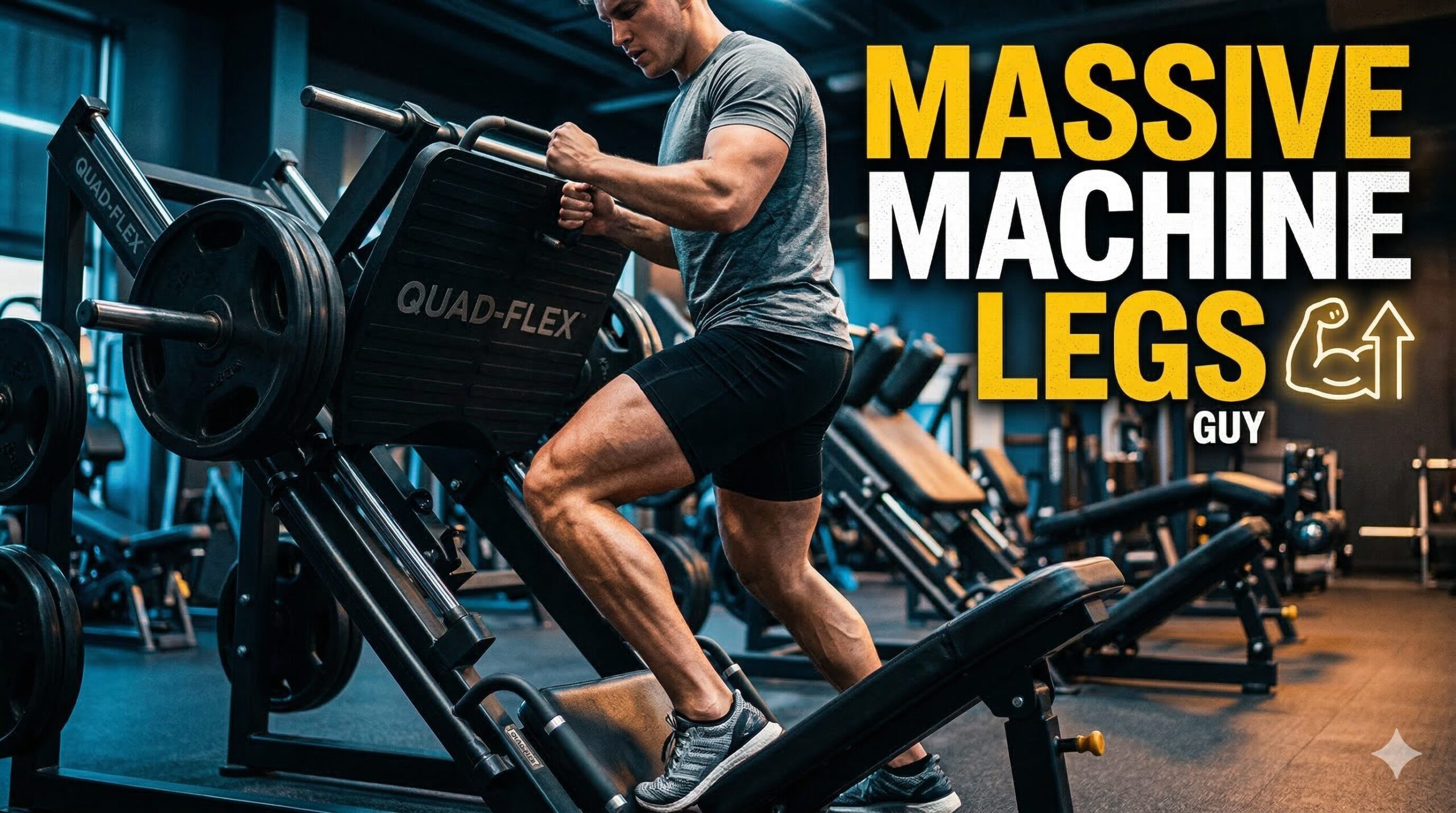
Building a powerful lower body doesn’t always require a barbell on your back. In fact, some of the most impressive leg development in the world comes from strategic, high-intensity machine training. Whether you are a beginner looking for stability or an advanced lifter chasing maximum hypertrophy (muscle growth), leg machines offer a level of isolation and safety that free weights simply cannot match.
In this comprehensive guide, we’ll dive into the science of training machines for legs, the best equipment to use, and how to structure a routine that delivers massive results.
Why Use Training Machines for Legs?
Many “hardcore” lifting circles preach that free-weight squats are the only way to build legs. While squats are fantastic, machines offer unique advantages for hypertrophy and longevity:
-
Mechanical Stability: Machines remove the need for balance. This allows you to focus 100% of your effort on pushing the weight, rather than stabilizing it with your core.
-
Targeted Isolation: Machines like the leg extension or seated leg curl allow you to isolate specific muscles (like the quads or hamstrings) without fatiguing your lower back.
-
Safety at Failure: Most machines have built-in safety catches. This means you can train to “absolute failure”—the point where you can’t do another rep—without the risk of being pinned under a heavy barbell.
-
Constant Tension: Cable-based and cam-driven machines provide a consistent resistance curve, meaning your muscles stay under tension throughout the entire range of motion.
The “Big Three” Training Machines for Legs You Need
To build a complete lower body, you need to hit the quads, hamstrings, glutes, and calves. Here are the heavy hitters:
1. The Leg Press (The Mass Builder)
The leg press is the ultimate alternative to the back squat. By changing your foot placement, you can shift the focus of the exercise:
-
High Feet: More focus on the glutes and hamstrings.
-
Low Feet: More focus on the quadriceps.
-
Wide Stance: Targets the inner thighs (adductors).
2. Hack Squat
The hack squat machine mimics a squat but supports your back against a padded sled. Because your torso is fixed, it is arguably the best machine for targeting the “quad sweep”—the outer portion of your thighs that creates that powerful look.
3. Seated or Lying Leg Curl
While the leg press and hack squat are “push” movements, the leg curl is a “pull.” It is essential for developing the back of the leg. Research shows that the seated leg curl may lead to slightly more muscle growth because it places the hamstrings in a more “stretched” position.
How to Program Training Machines for Legs
If you want to grow, you need a mix of heavy compound movements and high-volume isolation. Here is a sample 1,000-calorie burning, muscle-building routine:
| Exercise | Sets | Reps | Focus |
| Hack Squat | 3 | 8–10 | Heavy compound, deep range of motion |
| Leg Press | 3 | 12–15 | Constant tension, mid-foot placement |
| Leg Extensions | 4 | 15–20 | Quad isolation, hold the squeeze at the top |
| Seated Leg Curls | 4 | 10–12 | Slow eccentric (lowering) phase |
| Adductor Machine | 3 | 15 | Inner thigh strength and stability |
| Standing Calf Raises | 5 | 10–12 | Heavy weight, full stretch at the bottom |
Common Mistakes to Avoid
Even with machines, form is king. Avoid these common pitfalls to keep your joints healthy:
-
Locking Your Knees: Never fully “snap” your knees straight at the top of a leg press or hack squat. Keep a slight “micro-bend” to keep the tension on the muscle, not the joint.
-
Lifting Your Hips: On the leg press, if your lower back rounds and your hips lift off the seat, you are going too deep or using too much weight. This is a recipe for a herniated disc.
-
Using Momentum: If you are swinging the weight on leg extensions, you aren’t training your quads—you’re training your ego. Control the weight on the way down for at least 2 seconds.
Conclusion
Training machines for legs is a science-backed way to build a powerful, aesthetic, and functional lower body. By eliminating the stability requirements of free weights, you can push your muscles to their absolute limit safely. Whether your goal is to fill out your jeans or improve your athletic explosiveness, don’t ignore the machines. Balance your routine, prioritize recovery, and watch your leg strength skyrocket.
Read More
7 Best Pull Day Exercises for Maximum Muscle Growth (2026 Guide)
FAQ: Training Machines for Legs
1. Can I build big legs using only machines?
Absolutely. Many professional bodybuilders rely heavily on machines to achieve maximum muscle hypertrophy while minimizing injury risk.
2. Are machines safer than free weights?
Generally, yes. Machines guide your path of motion and usually have safety stops, making them ideal for beginners or those with lower back issues.
3. How often should I train my legs on machines?
For most people, training legs 2 times per week is the “sweet spot” for growth, allowing for 48–72 hours of recovery between sessions.
4. Should I do machines before or after free weights?
If you use both, do free weights (like barbell squats) first when your energy and focus are highest, then use machines to “finish off” the muscles with higher repetitions.