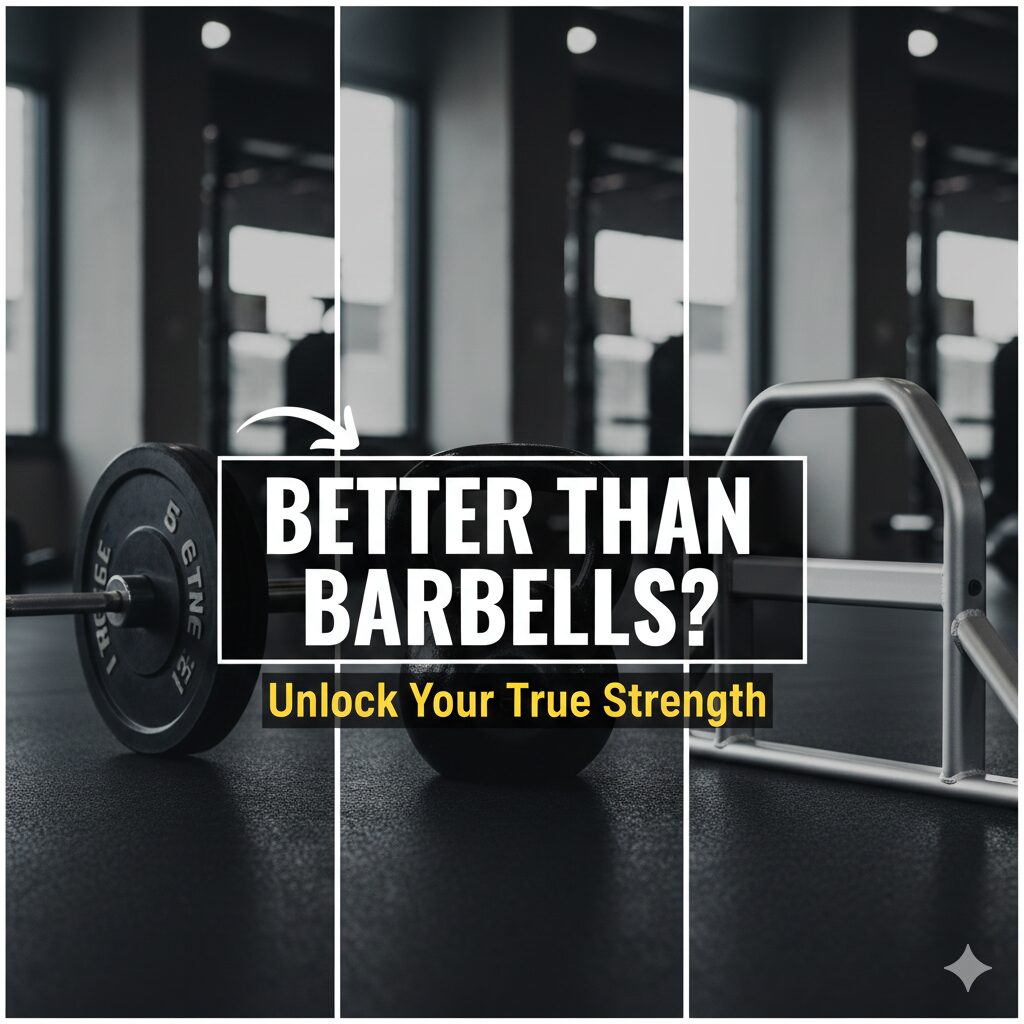
Looking to build strength without the back pain? Discover the best deadlift alternatives—from Trap Bars to RDLs—to grow your glutes and hamstrings safely. Click to find your perfect match!
Why Look for a Deadlift Alternative?

Before we dive into the “how,” let’s talk about the “why.” The conventional deadlift is a high-skill, high-reward movement. However, it has a few drawbacks:
-
Lower Back Stress: The sheer shear force on the spine can be unforgiving if your form isn’t 100% perfect.
-
Anatomy: Some people are simply not built for the barbell deadlift. If you have short arms and a long torso, pulling from the floor can feel like a nightmare.
-
Recovery Demand: Heavy deadlifts tax the Central Nervous System (CNS) more than almost any other lift.
The Goal: Matching the “Hip Hinge”
The deadlift is essentially a hip hinge. Any good alternative must replicate this pattern—pushing the hips back while keeping a neutral spine—to target the glutes, hamstrings, and erector spinae.
1. The Trap Bar Deadlift (The “Middle Ground”)
If you want the benefits of a deadlift with half the risk, the Trap Bar (Hex Bar) Deadlift is your new best friend.
Why it works:
The trap bar allows you to stand inside the center of gravity rather than the weight being in front of you. This shifts the load back toward your hips and legs, significantly reducing the “pulling” force on your lower back.
Key Benefits:
-
More quad engagement than a traditional deadlift.
-
Easier to learn for beginners.
-
The neutral grip (palms facing in) is easier on the shoulders and wrists.
2. Romanian Deadlift (RDL)

The Romanian Deadlift is the gold standard for hamstring and glute isolation. Unlike the conventional version, you start from a standing position and lower the weight only until you feel a deep stretch in your hamstrings.
Why it works:
By removing the “pull from the floor,” you maintain constant tension on the muscles. This makes the RDL superior for hypertrophy (muscle growth) compared to the conventional deadlift.
Pro Tip: Focus on “painting your legs” with the bar. The further the bar drifts from your shins, the more your lower back has to work.
3. Kettlebell Swings (The Power Producer)
If you want to build explosive power and cardiovascular endurance, look no further than the Kettlebell Swing.
Why it works:
It’s a dynamic hip hinge. Instead of a slow, grinding pull, you’re using your glutes and hamstrings to snap the weight forward. It’s a “deadlift in motion” that builds incredible athletic ability.
SEO Note: Many searchers looking for deadlift alternatives for home find kettlebell swings to be the most space-efficient and effective option.
4. Barbell Hip Thrusts
If your main goal for deadlifting was to build a better backside, the Hip Thrust actually outperforms the deadlift in glute activation studies.
Why it works:
The “point of maximal tension” in a deadlift is at the bottom, where the glutes are stretched. In a hip thrust, the tension is highest at the top (full extension). This makes it one of the best deadlift alternatives for glutes without taxing the lower back or grip.
5. Back Extensions (45-Degree or Flat)
Don’t let the “fancy” gym machines fool you; the Back Extension (weighted or bodyweight) is a powerhouse for the spinal erectors and hamstrings.
Why it works:
It allows you to train the hip hinge with a much smaller “axial load” (weight pressing down on your spine). It’s an excellent choice for those recovering from a disc injury or anyone looking to add high-volume accessory work.
Choosing the Right Alternative for Your Goal
Not all deadlift alternatives are created equal. Use this table to find your perfect match:
| Your Goal | Best Alternative |
| Maximum Strength | Trap Bar Deadlift |
| Bigger Hamstrings | Romanian Deadlift (RDL) |
| Glute Aesthetics | Barbell Hip Thrusts |
| Explosive Power | Kettlebell Swings |
| Lower Back Safety | Back Extensions / Glute Bridges |
How to Program These Into Your Workout
You don’t need to do all of these at once. If you’re replacing the deadlift, try this simple structure:
-
Primary Move: Pick one heavy compound (Trap Bar Deadlift or RDL) for 3 sets of 5–8 reps.
-
Accessory Move: Pick one isolation or dynamic move (Hip Thrusts or Kettlebell Swings) for 3 sets of 12–15 reps.
Read More Content
Easy One-Pan Chicken Broccoli Rice Recipe (Healthy & Fast)
Conclusion
The barbell deadlift is a fantastic tool, but it isn’t a requirement for a strong, muscular body. By utilizing a deadlift alternative like the Trap Bar Deadlift or the RDL, you can achieve the same—if not better—results while keeping your spine safe. Remember, the best exercise is the one you can perform consistently, with great form, for years to come.
FAQ: Frequently Asked Questions
1. Are deadlift alternatives as effective as the original?
Yes. For specific goals like muscle growth or lower back health, many alternatives (like RDLs or Hip Thrusts) are actually more effective because they allow for better muscle isolation and higher volume.
2. Can I use dumbbells instead of a barbell?
Absolutely. Dumbbell RDLs or Dumbbell Goblet Squats are excellent alternatives, especially for home workouts or those working on fixing muscle imbalances.
3. I have lower back pain; which should I choose?
Generally, the Trap Bar Deadlift or Glute Bridges are the safest. However, you should always consult a physical therapist before starting a new lifting program if you have an active injury.
4. What if I don’t have any equipment?
You can perform Single-Leg Glute Bridges or Good Mornings (mimicking the hinge movement) using just your body weight to maintain the hip-hinge pattern.
1 thought on “7 Best Deadlift Alternatives for a Powerful Back (Injury-Free!)”